

7 Features of a High-Impact Retail Display
But as you get further inside, a retail display catches your eye and turns your head. Maybe it was the bright colors, the creativity, or the sheer size of it ... Whatever caught your eye now has you considering an impulse purchase.
That’s the power of a well-executed retail display, especially when it’s strategically placed at the point of purchase (POP). In fact, 62% of shoppers make impulse buys, according to a POPAI study, and 16% of those shoppers made their impulse purchases because of an in-store display. What is it about those retail displays that got people’s attention and translated it into sales?
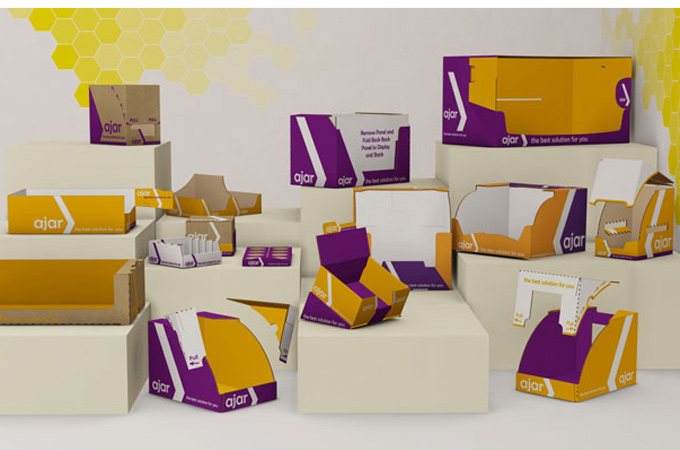
It’s widely known that retail displays can increase your sales and brand recognition, especially if you create a stellar merchandising display that will capitalize on its full potential to capture shopper attention. After developing successful POP displays for many large CPGs and emerging brands, our designers have learned there arecertain elements they need to add to ensure the success of a display.
What makes POP displays successful? 7 features that matter:
1. Tell a good story
Having a great brand or product narrative that can be carried over and told through your retail display should increase engagement. We’re 22 times more likely to remember a fact when it’s included in a story, according to a study by psychologist Jerome Bruner.
“It's not always about the amount of product in the display,” said Nick Hughes, Merchandising and Display Creative Director at Smurfit Westrock. “It's about informing people about what the product is and the benefit of the product, which gives people a reason to pick you.”
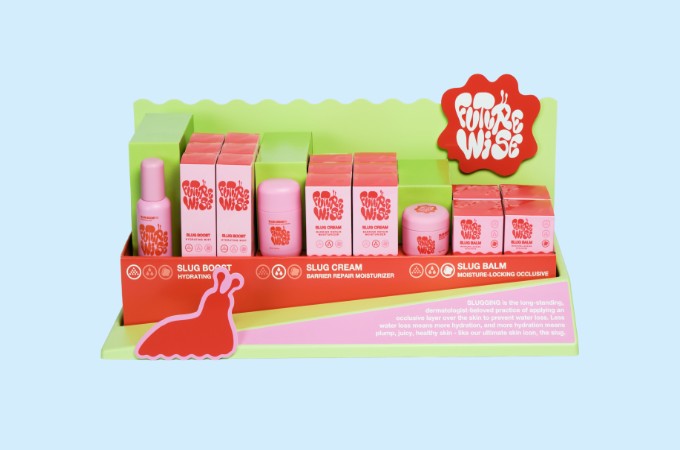
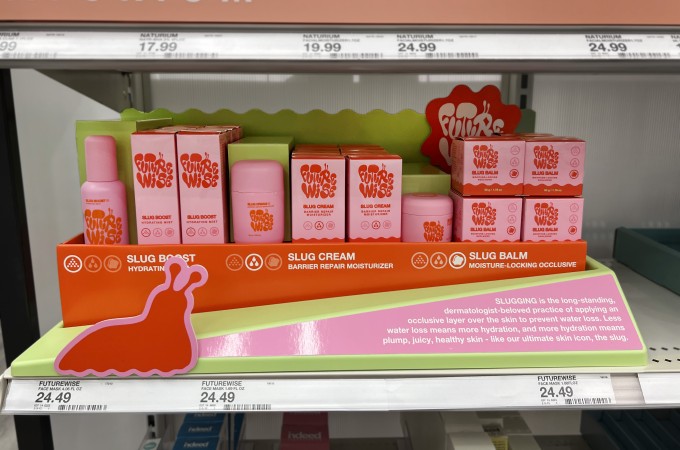
For its shelf displays, Futurewise used a pdq tray (a display that comes already stocked and assembled) to educate people about “slugging” (the process of applying a heavy layer of occlusive ointment, like Vaseline, to the skin over a normal layer of lotion or cream to lock in hydration). The term was known in the Korean beauty world but not as known in the U.S., prompting Futurewise to engage in storytelling to educate its audience and create demand.
Here are some different types of narratives you can use:
Origin stories—Share the origin of your brand and how it came about.
Overcoming the odds—Tell your underdog story (popular with challenger brands).
Customer hero journeys—Showcase the customer as the protagonist who succeeds with your help.
Social mission stories—Share the story of the mission your brand supports.
Product journeys—Focus on the creation, discovery or unique experience of your product.
2. Make it sustainable
According to a McKinsey study, products making ESG-related claims experienced greater growth in a five-year period than products making no such claims (28 percent versus 20 percent). If your product has some claims to make, including them in your POP display will help it be more successful.
In addition to product claims, the sustainability of the display itself is also an important factor. Making sustainability claims while using materials in your fixture that aren’t recyclable seems like a contradiction.
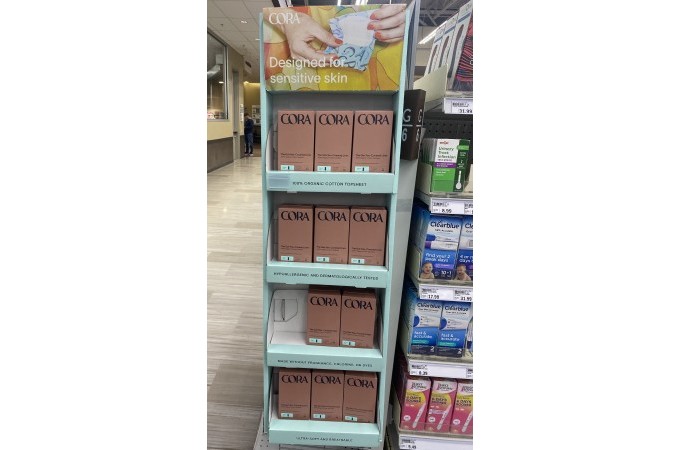
“We've designed out all the elements of the display that were not sustainable, like the trays which used to be put on the bottom to stop it from getting wet when they mop the floors,” said Mike Devine, Creative Services director at Smurfit Westrock. “We now have a waterproof, corrugated version that does the same job, and the displays can go straight into recycling when they’re no longer needed.”
Major retailers have been setting sustainability requirements for brands they carry, such as reductions in plastic use. Therefore, if your retail display is made from recyclable materials and showcases sustainability, a retailer may be more likely to give you their stamp of approval.
3. Include depth and scale
Creating depth in a design makes it more interesting and appealing, which leads to more engagement.
“We do a lot of layering of boards on headers to give you depth,” said Devine. “We've done some where you curve pieces of printed material and it gives you a 3-D effect.”

Playing with scale, such as making a graphic like a cereal bowl much larger than it would be in real life, can also grab more attention by being clearer to see from a distance. And greater scale can also be achieved with the sheer size of the retail display. Shoppers are sure not to miss a pirate ship built out of beverage 12-packs or a walk-through display that doubles as a pop-up store.
4. Personalize it
In order to best appeal to your target customer, it’s important to dig into their psychographics as well as their demographics. What do they think and believe? What are their opinions, attitudes and interests? What is their lifestyle like?
Once you understand these things, it’ll be easier to find a creative way to show you understand them.
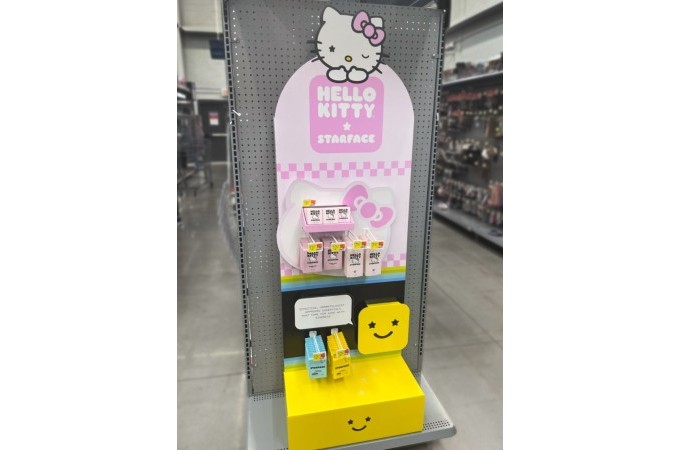
“When your ideal customer sees your display, they should see themselves,” said Leon Nicholas, vice president of Retail Insights and Solutions at Smurfit Westrock. “It should not only resonate with them but should make them think, ‘This brand gets me.’”
5. Add interactive elements
Walking kids through a home improvement or big box store before Halloween or the holidays can be an event. Once they realize that some of the lawn decor on display lights up or plays music or sounds when they walk by, they want to walk past those sections over and over again.
Retail displays that are interactive can have a similar effect on your audience. Interactive displays were found to increase customer engagement by an average of 60%, according to research from Ombori.
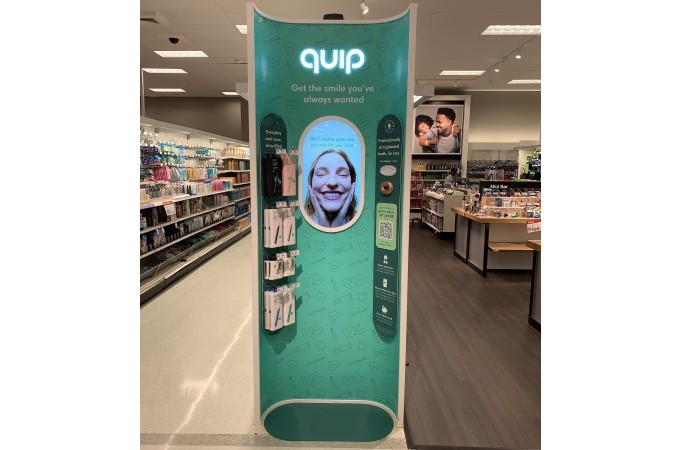
“We created one for a deodorant brand that had a number of scent buttons on the structure,” said Devine. “So, you could press each scent button to give you a little sense of what each would smell like.”
Whether you use motion sensors with lights, sounds or movement, push buttons, QR codes, cameras or touchscreens, a POP display that invites your audience to participate will increase the amount of time they engage with it and make it more memorable.
6. Be quick to market
Sometimes it’s not just about the way the display looks but how fast you can meet demands and capitalize on trends. Creating an in-store display used to take weeks and months; during the design process physical samples had to be sent to customers, marked up and sent back. But thanks to digital design tools with 3-D environments, designers have sped up the process.
Now, as long as customers provide feedback quickly, our design teams may be able to turn a design around for an established customer in as little as 7-to-10 days. This allows brands to more easily leverage trends or more quickly respond to market demands.
For example, in response to a global pandemic a brand could quickly create a display promoting things such as hand sanitizer, work-from-home supplies, or false eyelashes (for the only facial feature seen while wearing a mask).
7. Create something totally unexpected
By focusing on what your consumer is looking for and how the product provides it, you can come up with many creative ways to reach them within those parameters. The key is to make a point in an unpredictable way.
For example, to better sell its coats, Canada Goose developed a “cold room” display where you can test out their coats in below-freezing temperatures. And Lego has developed such a reputation for creative in-store displays that they are now being sold as collectors’ items. Bricks fans sometimes spend thousands to purchase one display.
Whether your approach is interactive or Instagram-able, aim to create something your consumers will want to talk about and share because it was “different” or gave them more of what they wanted.
Use a provider who will give you the above and more
Working with an experienced team of designers will not only yield a great design but it’ll also help you work with various retailers. Retailers have many requirements for their displays, and experienced designers will be familiar with different requirements at all the major retailers.
An experienced team will also be able to leverage their research, data and tools to better appeal to your target consumer.
“We have a new AI tool where you can send through a 3-D rendering of your structure, and within 24 hours it'll give you a report back to say how effective it is, how it's going to influence the sale, and where there might be weaknesses,” said Devine.
Whether you’re designing a retail or POP display,the right tools and experience will give your display every possibility to meet its full potential. To get started on your next display, contact our team of talented designers and marketing experts.


Our Latest Blogs