







9 Ways Emerging Brands Can Win Customers With Retail Displays
With digital advertising and a bevy of influencers on social media, small, emerging brands are shaking up consumer retail. In 2024, emerging brands experienced almost 39% of category growth, up from 17% the previous year.
For example, the Pink Stuff, a fluorescent pink cleaning paste, quadrupled its 2018 sales to hit $125 million in 2023, all thanks to its cleaning influencers and TikTok presence.
Despite the success of online sales fueled by social media virality, these emerging brands that started in e-commerce still feel the pressure to enter brick-and-mortar for one main reason: customer acquisition costs (CAC). Continuing to go viral and get free advertising is hard to sustain, which means online brands spend a large part of their marketing budgets on digital advertising. That can translate to a significant CAC to get one new customer or even a repeat one.
As of 2022, online brands lost an average of $29 to acquire a customer, a 222 percent increase from 10 years prior. This is why getting the product in front of customers through brick-and-mortar becomes so enticing, especially by having an in-store display.
In a webinar from Supply Chain Now, Imran Patel, former VP of Business Development and Partnerships at oral care brand quip, summed up why the brand had a desire to make its transition to the brick-and-mortar space.
An end cap (display) at a place like Target in normal times in Q4 will have 30 or 40 million people walk by it across their network of stores, in either a week or a month,” said Patel. “There are very few assets that we [publish] in digital channels that are going to have that kind of reach for a high-intent customer.”
Retail displays can drive success for brands eager to launch into retail and show a good return on marketing spend. Here are some tips you can use to make sure your display makes an impression and gives you the best bang for your marketing buck.
1. Personalize the retail display
“When your ideal customers sees your display, they should see themselves,” said Leon Nicholas, vice president of Retail Insights and Solutions at Smurfit Westrock. “It should not only resonate with them, but should also make them think, ‘This brand gets me.’”
In order to best appeal to your target customer, it’s important to dig into their psychographics instead of solely their demographics.
-
What do they think and believe?
-
What are their opinions, attitudes and interests?
-
What is their lifestyle like?
Once you understand these things, it’ll be easier to find a creative way to show them you understand them.
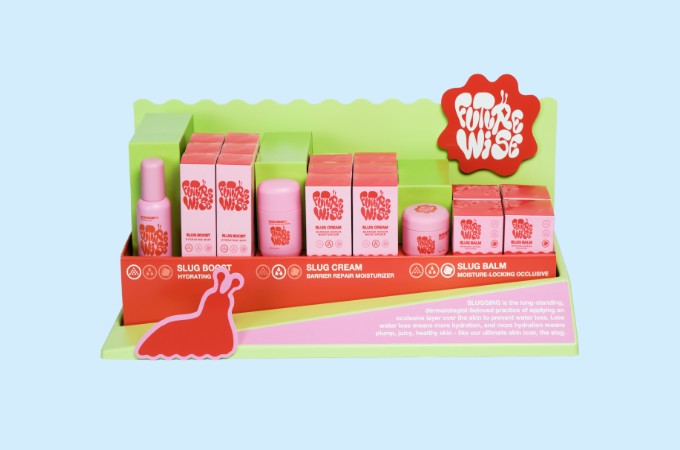
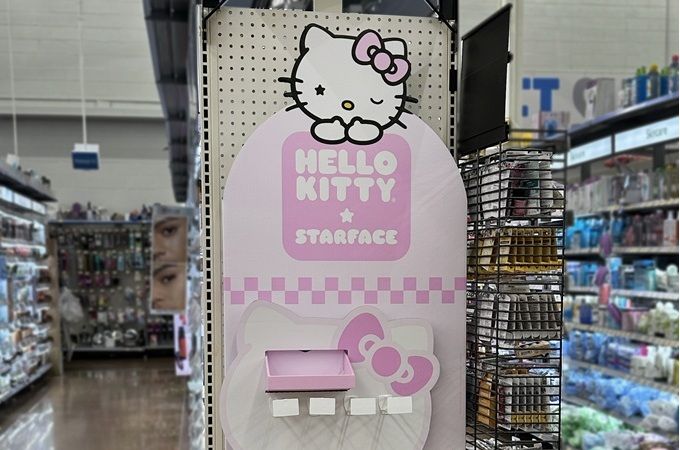
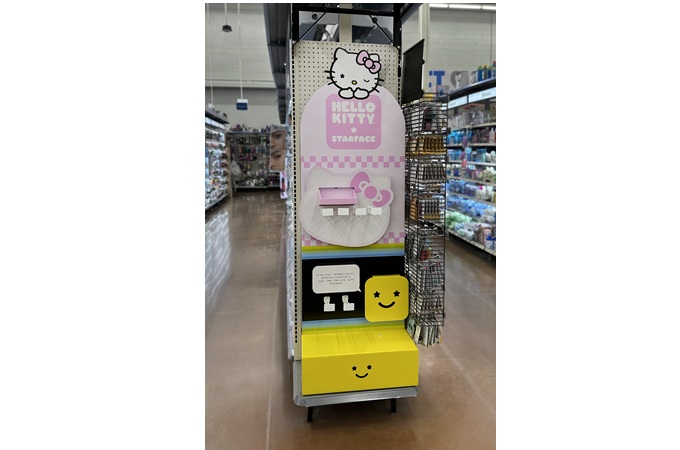
By collaborating with the Hello Kitty brand, Starface made a great attempt to show its Gen-Z audience that it knows what they like and has a desire to create products that speak to them personally. Similarly, Futurewise not only embraced colors and graphics that appeal to that same audience, but the products themselves also capitalized on new and trending fads in skincare.
Ways you can personalize:
Images—How will the images reflect my customer or their lifestyle?
Height—If my customer is short (i.e. kids), then major attention-grabbing elements should be at their eye-level.
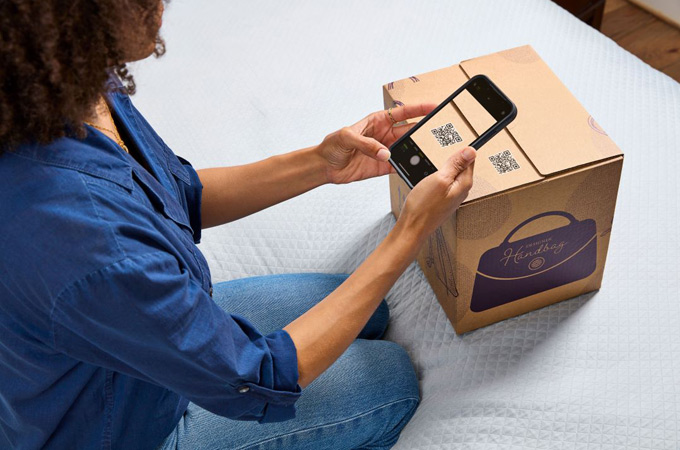
Digital experience—If your customer is a digital native, they’ll feel seen by the inclusion of interactive elements like QR codes or by a display’s ability to be used as a photo backdrop.
Text—Does any included text use what your customer is seeking to grab their attention?
2. Capitalize on your online engagement
Any emerging brand that’s had success online has probably gained that success by cultivating a following in the digital realm. You don’t have to start over just because you’re adding a distribution channel.
Once consumers have built a relationship with you, you can transfer that relationship to the physical realm. Your online consumers still make trips to brick-and-mortar stores; you just need to make sure they recognize you and can engage with you in the same way when they’re in store.
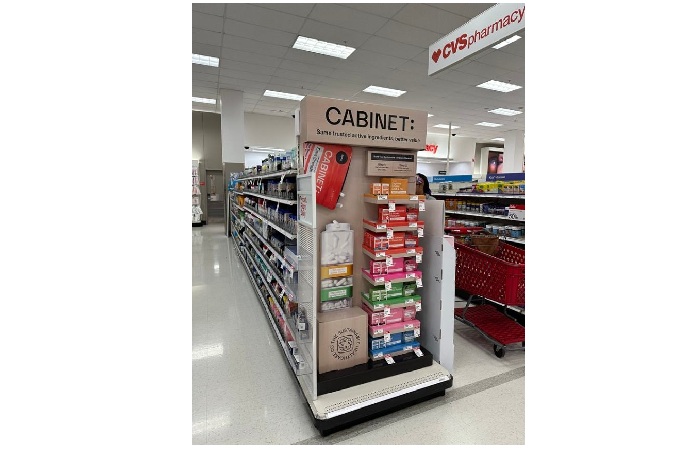
To do that, make sure you carry over familiar ads, campaigns and branding. Cabinet Health did this successfully with its first major retail display. The color-coded organization of its display matched the organization and categorization of its website, allowing the display to function in a way that was familiar to the company’s online audience.
“We like to do our homework,” said Alex Sin, director of Packaging Design at Smurfit Westrock. “We get online, as we want to see how they communicate and convey themselves through social media and their actual websites, because that's going to play an important role ion how we communicate to the specific retailer and the consumer in that retail environment.”
3. Create space for storytelling and more branding
A good brand narrative gives your ideal customer a reason to pick you, which is why a portion of your display space should favor storytelling over product space.
“It's not always about the amount of product on there,” said Nick Hughes, senior manager of Packaging Design at Smurfit Westrock. “It's about informing people about what the product is and the benefit of the product, which helps establish the brand.”
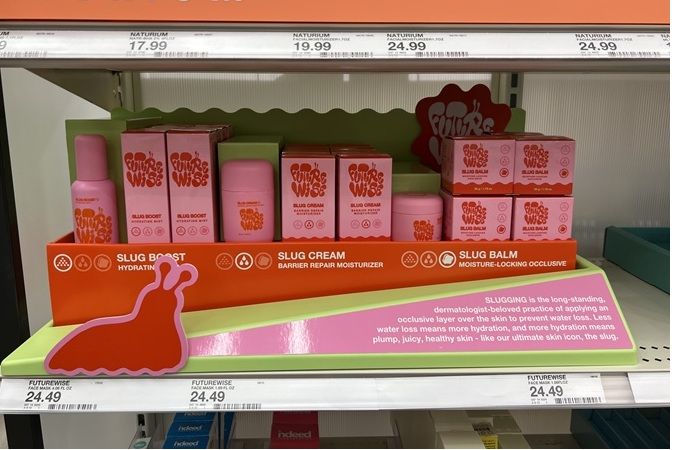
Additionally, if you’ve already built an online following, this will help continue your narrative into brick-and-mortar and bring your followers along for the ride. For its retail displays, Futurewise carried over the bright colors, graphics and lifestyle photography from its website, creating continuity for their brand.
The brand also shared a great example of storytelling by using its pdq display (one that already comes stocked and assembled) to educate people about “slugging” (the process of applying a heavy layer of occlusive ointment, like Vaseline, to the skin over a normal layer of lotion or cream to lock in hydration). The term was known in the Korean skincare world, but not as known in the U.S., prompting Futurewise to engage in storytelling to educate its audience.
4. Showcase sustainability on the display
If greater sustainability or all-natural products are a focus for your company and your product, then that story is an important one to tell through your retail display. According to a McKinsey study, products making ESG-related claims experienced greater growth in a five-year period than products making no such claims (28 percent versus 20 percent).
Retailers also want to showcase sustainability, so it’s associated with their brand. Major retailers have been setting sustainability requirements for brands they carry, such as reductions in plastic use and requiring QR codes for better tracking and reduction of waste. Therefore, if your display tells a similar story, a retailer may be more likely to give you its stamp of approval.
Ways you can incorporate it:
Design—Use imagery and design elements that communicate your dedication to the planet, such as using a substrate for your retail display like natural kraft paperboard.
Text—Think about how to communicate your mission and/or commitment in your display copy.
Your story—If you’re following #3 and reserving more space to tell your story, you can use it to share your sustainability narrative.
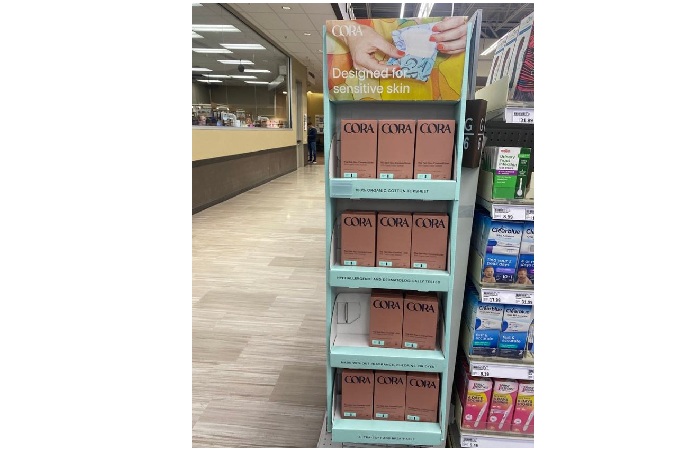
Certified B-corp Cora period products had great success with their first retail displays, winning them a second run in all their locations and a 2024 Shop! OMA Award in the Healthcare category. For their end cap, we purposely designed the product shelving with no lip so that consumers could easily see their packaging and the copy on it that reads “100% organic cotton topsheet.”
5. Make the display interactive
Giving consumers something to “do” provides them an experience with your display, making your brand more memorable. Additionally, if your brand is new and they don’t know much about it, greater interaction can help them learn more and get to know it better.
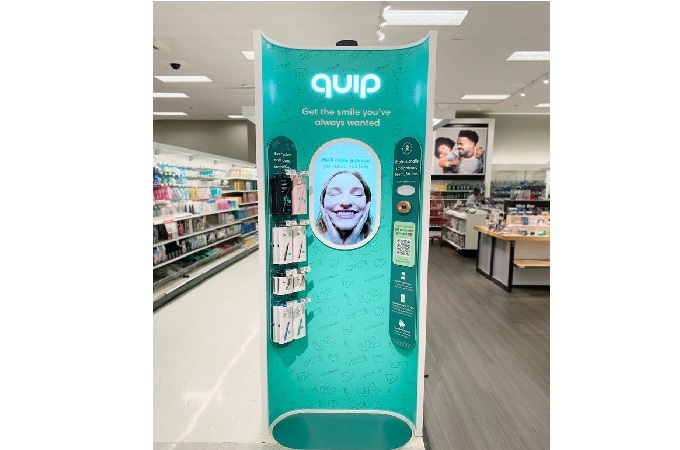
Oral Care brand quip designed a revolutionary test program to introduce retail shoppers to its aligners pilot capabilities. We collaborated with the quip team to produce an end cap display that invited consumers to interact with video content at mirror-height while also exploring additional products in the line. The experience included a video about their aligners, as well as samples they could see and touch.
Other ways to make it interactive:
- QR Codes
- Holographic tech
- Instagram-worthy backdrops and an invitation to post a pic with a certain hashtag
- A photo booth that takes snapshoeople and makes personalized recommendations
- Engaging the senses with responsive audio, responsive lighting, or an invitation to try different scents.
6. Market to Gen Z and Millennials
39 percent of Gen Z-ers are likely to try a new brand, and so are over a third (35 percent) of Millennials.1 Marketing to those who are easier to acquire as customers will help you get more engagement and make more sales.
When it comes to these generations, they are mostly digital natives. Using images like icons, emojis and text bubbles will appeal to them. They’re also used to navigating through digital content, which means they’re used to viewing media with a top-down and left-to-right approach. Aligning your retail display so they can navigate viewing it in the same way will help you engage them.
Starface appealed to digital natives by launchinits Hello Kitty collab with a display that featured an emoji-like avatar and copy in a speech bubble. Other brands are aligning categories of products in their displays in the same way they’re aligned on the home pages of their websites.
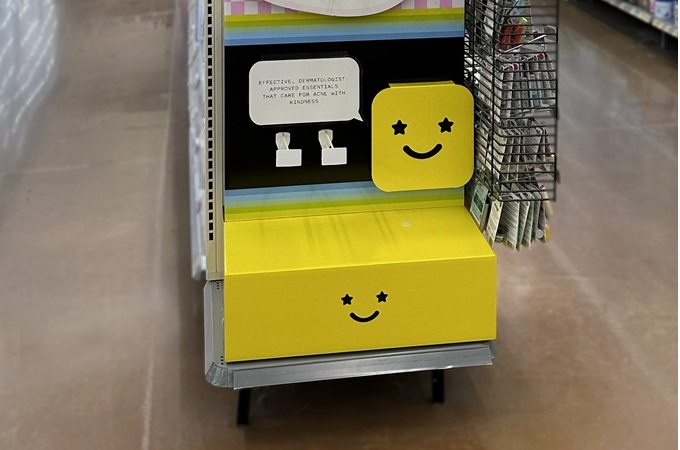
"Web-based navigation can be used both online and in store for the digital native,” said Caleb Loftin, senior manager of Packaging Design at Smurfit Westrock. “We’ve designed displays so that they have the same logic flow compared to when you go to their website and click on their products.”
7. Leverage online reviews
If you have a fairly new brand, then you have a need to gain consumer trust. To figure out whether to trust a brand or a purchase, people will check the reviews. And when reviews for a high-priced product are displayed, the likelihood of a sale increased by 380 percent.
You can let consumers know they can trust you by sharing a word-for-word online review from a customer in your display or sharing your average consumer rating. When Native deodorant first began, it gained notice from new audiences with displays that shared the number of 5-star reviews it gained from customers. As a new brand, it scaled to $100 million in revenue in just two years.
8. Use influencers
Remember those Gen-Z consumers who are the most likely to try a new brand? Well, 72 percent of them follow influencers on social media. On average, brands make $6.50 for every dollar they spend on influencer marketing, but the top 13 percent of brands paying for influencer marketing make $20 for every dollar spent.
Your goal is to maximize your influencer marketing spend so you can be in that top 13 percent. One way you can do that is by making sure you connect your retail display to your most recognizable influencers.
You can use your display to invite consumers to follow your influencers for the best tips on how to use your product. Provide a QR code so your consumer can connect to a video of your influencer demonstrating the product or interacting with it. Or you can even let your influencer reveal your new retail display and share with their followers where they can find the display and your new line of products.
9. Evaluate whether you’re really ready for retail
Many times, an emerging brand will come to us with a desire to do a retail display, and they might not be ready for retail just yet. Considering the following will help you figure out if you’re ready and how you can become ready.
Questions to ask yourself:
Do you have a strong brand and narrative?
Before putting your brand in front of tons of retail consumers, make sure it’s solid. Your brand should know who it is, what it’s about and what it can provide your consumers that no other brand can.
“You have to be authentic and true to yourself,” said Jeffrey Peterson, senior manager of Packaging Design at Smurfit Westrock. “You have to find that market position that separates you, defines why you're different. What's the benefit to choosing me versus the big brands that are already out there?”
How well do you know your audience?
Everyone says they know their audience, but if there’s anything we’ve learned it’s that people can surprise you. Make sure you have data and consumer insights that can help you and us understand audience demographics and psychographics.
Do you have a significant digital and social following?
If you do, there are ways we can transition that following into retail. If you don’t, major retailers may not be willing to give you display space if they don’t see evidence that you can engage the public and make sales. Showing them you already have a following ready to buy is important to securing retail space for your brand.
Are you in a position to fulfill large orders?
Sometimes a brand is ready for retail, but their operations and logistics aren’t.
“Where are you in the process? Who's manufacturing your products?” said Sin. “If you were to scale today, or if Walmart were to call you tomorrow and say, ‘Let's go,’ are you ready?”
If you put a retail display into a store like Wal-Mart and it’s a hit, Walmart's going to want more product—fast. If your operation is not at a point where it’s ready to scale quickly if it needs to, then you may need to hold off on a display until it is.
How well do you know each retailer's expectations?
Each major retailer has its own requirements for displays—and they’re lengthy! One retailer’s requirements might be a 20-page PDF filled with 10-point text on each page. Not only will you have to meet their requirements, but you’ll also have to make sure your design aligns with their brand.
This is where working with retail display experts is a plus. If you hire a creative agency to design your display, what they create may not align with these requirements. Smurfit Westrock designers are used to working with all the major retailers. We understand their requirements and can help you navigate them.
Once you’re ready for retail, you can contact our team to get started on designing your display and navigating the requirements of major retailers. These tips will help you on your journey, and contacting our team can help you meet retailer demands.
1. Source: digitalinformationworld.com, target.com


Our Latest Blogs